SPD Advantages Over Binder Jetting
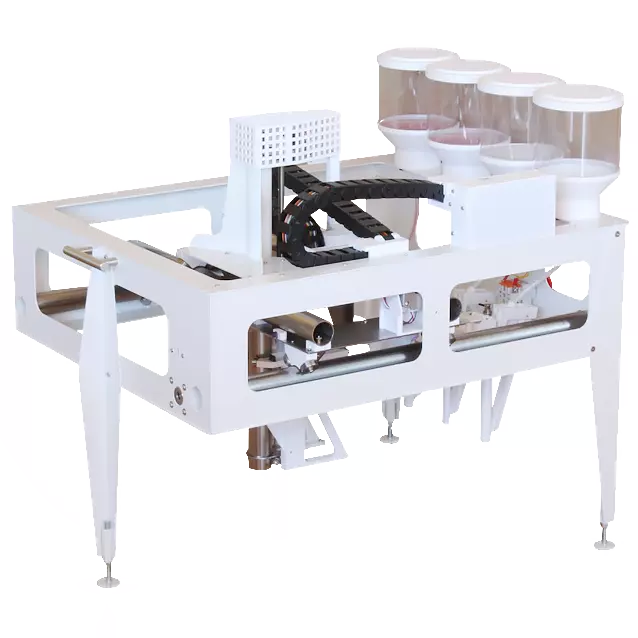
HIGHLY AFFORDABLE
| Desktop Metal's ExOne S-Max: | Starting at $1.4M |
| Voxeljet's Voxeljet VX1000: | Starting at $1M |
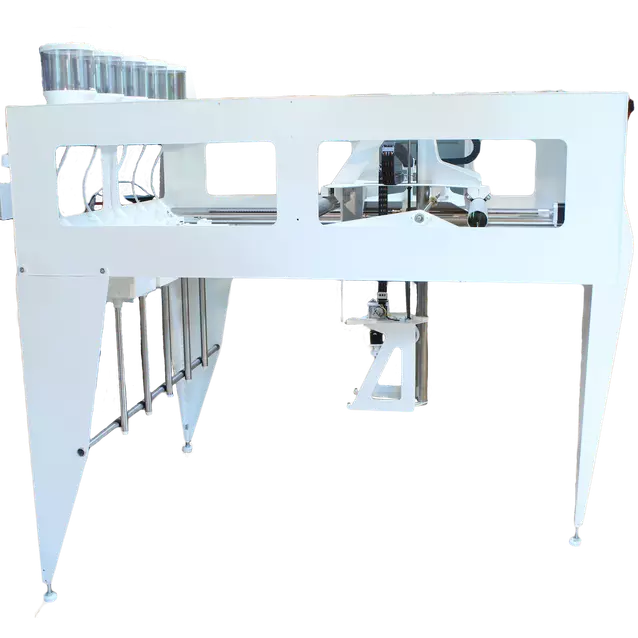
| Alladin3D's Model G: | Only $45K |
| Aladdin3D's Model C: | Only $15K |
NO SHAPE LIMITATIONS
With Binder Jetting, every surface must be cleaned with a brush and compressed air after printing to remove partly bound sand. Therefore, every surface must be accessible, which prohibits complex internal geometries. With SPD, in contrast, unbound sand can be simply poured out. Any few remaining sand particles can be removed by shaking or washing with water. So complex internal geometries are possible, as shown in
DIY 3D printing of sand mold for metal casting video.
NO STORAGE HEADACHES
Binder Jetting molds require mosture-controlled environment due to the presence of the binding agent. Humidy over 50-60% will weaken the mold. In sharp contrast, SPD molds can be safelly rinsed with water.
CONTROLLABLE COLLAPSIBILITY
With SPD, collapsibility of different regions of the mold can be controlled independently by using different shell sands with different grain sizes and different binder amounts.
MULTIPLE MATERIALS
SPD allows different materials to be deposited in different regions. For example: a thin layer of zirconia sand can be deposited around the casting, and metal shot (chill) can be deposited near the regions that need to be cooled down first.
Binder Jetting Advantages Over SPD
MINIMAL FEATURE SIZE
Binder Jetting is capable of smaller feature size than SPD.
PRINTING SPEED
With SPD, speed depends on the object's size and complexity. For small and complex objects SPD is slower than Binder Jetting. For large and simple objects SPD is faster than Binder Jetting.